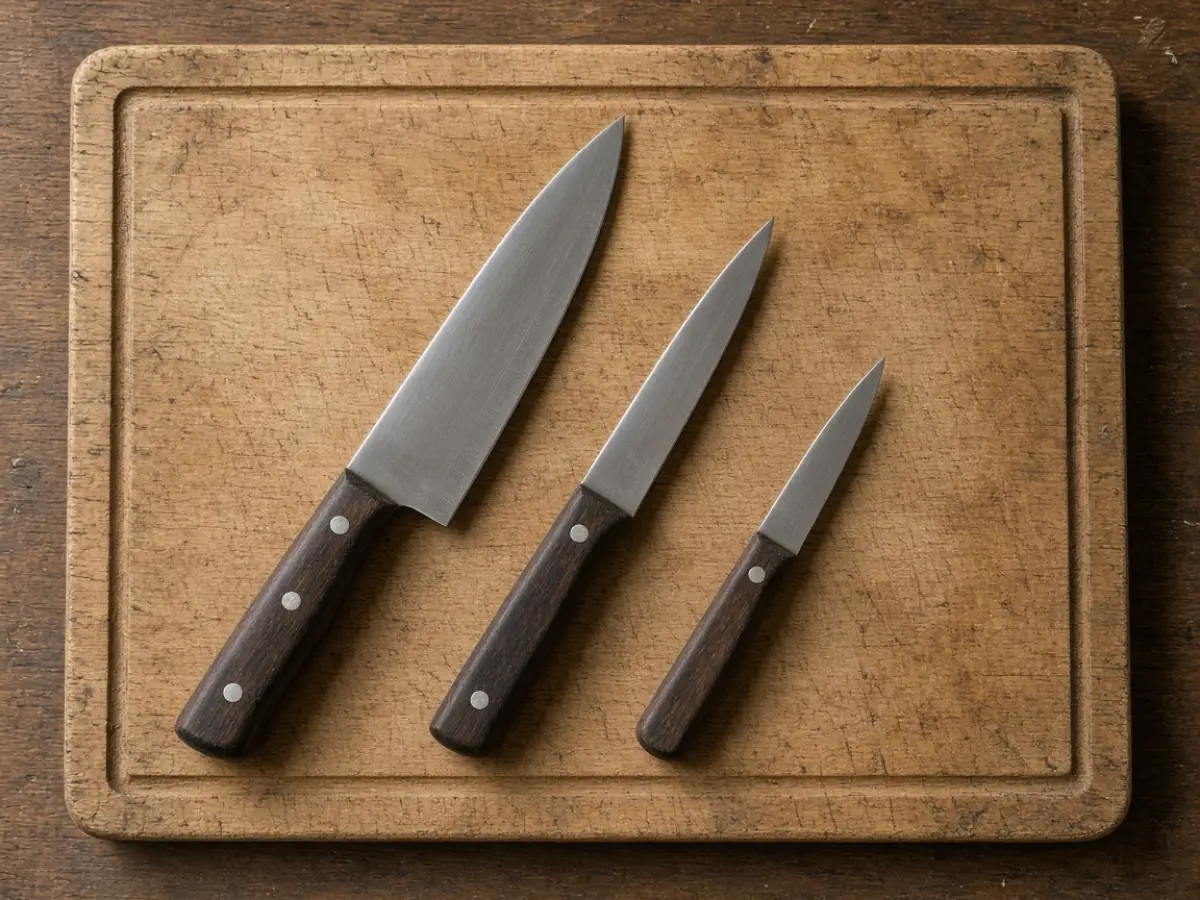
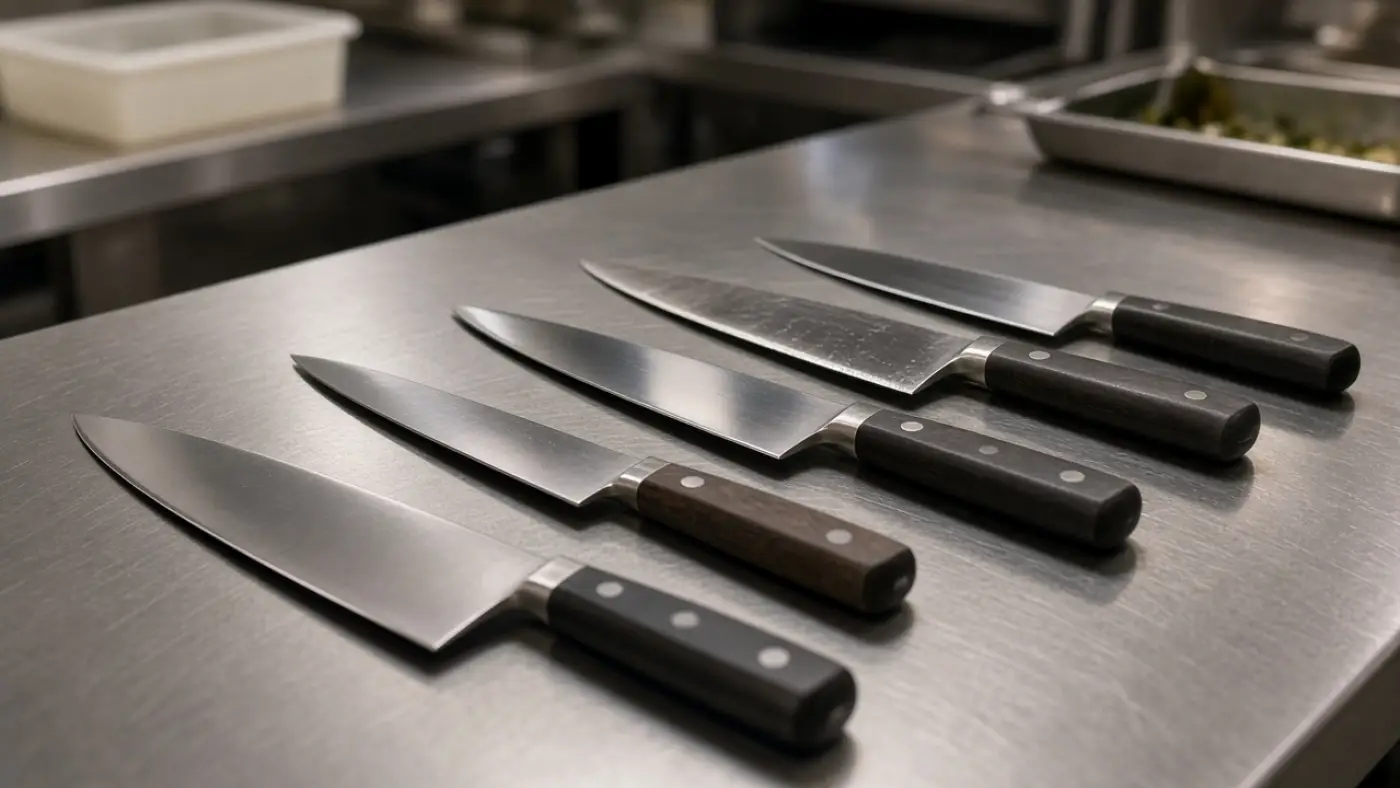
A chef knife fails in public. The board slows down, the brunoise gets smashed, and someone reaches for a lesser knife. Sharpening that knife is ordinary maintenance for a tool that works every service or every dinner.
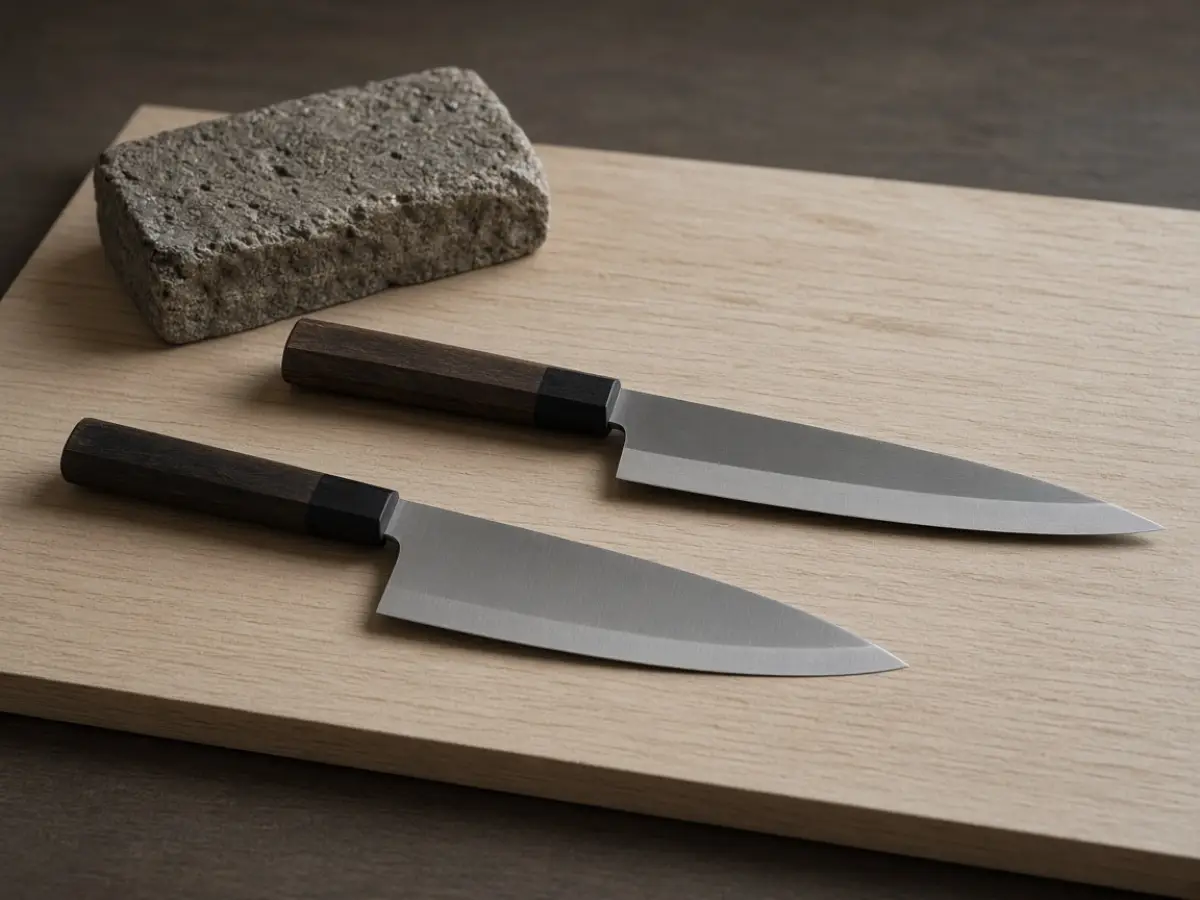
Japanese knife sharpening sits in this same service because the search is usually about the same object: the primary kitchen knife. The work is not identical. A double-bevel gyuto can be sharpened on both sides. A yanagiba, usuba, or deba is single-bevel, and the cladding, the ura, and the angle all matter. Name the knife when you book.
How we treat a better knife
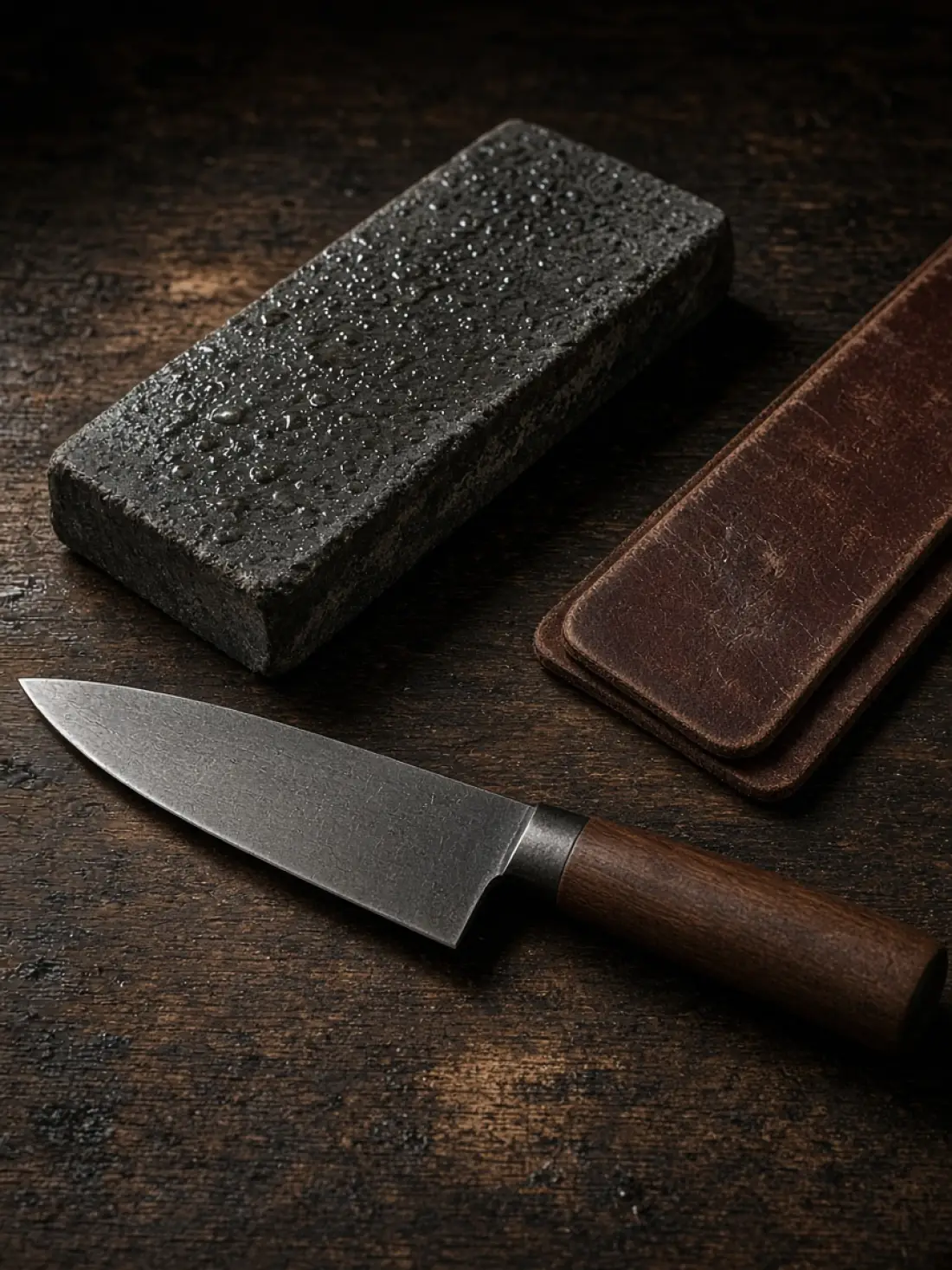
Harder steels, thinner grinds, and polished bolsters reward patience. We do not run a fine kitchen knife through a coarse, one-size process to make it feel sharp for a day. If a knife has a hamaguri or convex edge, or a very thin tip you want preserved, say that in the request.
We do not claim a certification in Japanese sharpening, and we do not invent a specialty credential. What we do is ask which knife you have and sharpen it in a way that fits that geometry, or tell you if it should not be included.